GEDI
Black Friday Is Here
No need to wait for Friday.
20% OFF
Use code at checkoutBF20
Buy 2 watches
Get 1 free initial keyring
 Skip to content

A favorite watch stops during the morning routine, and a simple question suddenly becomes surprisingly difficult: what battery does my women’s watch take? Search results offer tiny silver discs with almost identical names, while the watch itself may show only a brand name and a few markings on the back. Buying the first battery described as suitable for ladies’ watches is an easy way to order the wrong one.
The useful answer is specific to the watch’s movement, the mechanism inside its case. Identify the required battery from the correct manual, reliable service information or the markings on the old cell, then arrange a suitable replacement. A small dial, a slim bracelet or a familiar brand logo cannot establish that specification. This guide explains how to get the information you need without turning battery replacement into guesswork.
No. “Women’s watch battery” describes a shopping category, not one standardized cell. Watches sold for women can have different movements, battery holders and power requirements. Even watches that look alike can need different batteries. Case shape, strap material and the size of the visible dial tell you about the design, not the exact cell inside.
First check how your watch is powered. A conventional battery-powered quartz watch, a solar watch, a rechargeable smartwatch and a mechanical watch need different approaches when they stop. If your instructions describe charging or winding, follow that route rather than ordering a disposable button cell. An analog display alone does not establish which power system the watch uses.
Manufacturers organize useful battery information around specific products. For example, CASIO’s official battery list by watch model pairs model numbers with battery types and notes that the listed products require special tools for replacement. Use an equivalent official resource for your own watch where available. A cell listed for one manufacturer’s model does not establish compatibility with another watch.
Look for the model or reference number in your order confirmation, product paperwork, warranty information or the markings on the case back. Photograph those markings clearly so that you can enlarge them without repeatedly handling the watch. A number on the back may describe a case, a movement or a product reference; ask the brand to interpret it if the meaning is unclear.
Search the manufacturer’s support pages for that exact reference. A manual covering the correct movement is more useful than a general article mentioning the same brand. If the manual specifies a battery, record the complete designation, including letters at the end. If it only directs you to a service center, follow that instruction and request the battery specification when the work is done.
When contacting customer support, send the watch reference, clear photographs of the front and back, and any available purchase information. Ask a direct question: “Which battery designation is specified for this watch or movement?” This gives the support team a better starting point than describing it only as a small gold watch. Keep their reply with the watch’s documents.
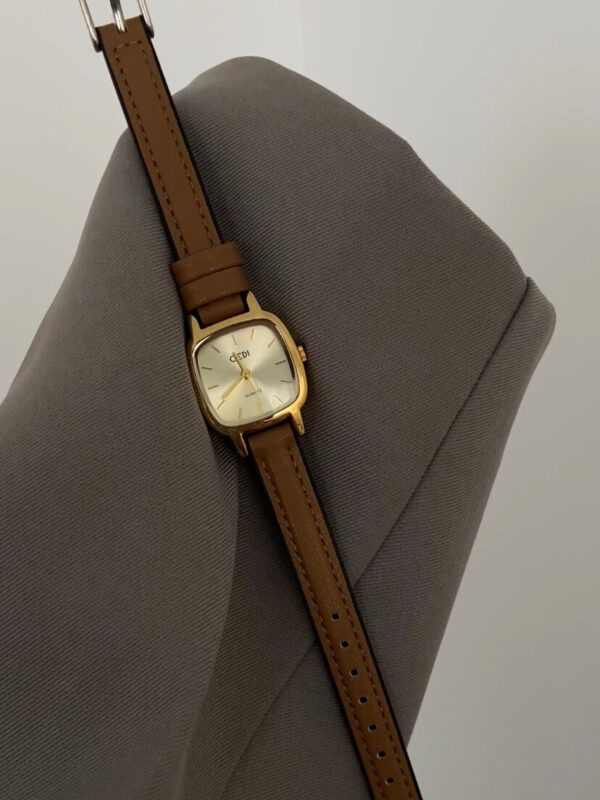
The same habit helps when choosing a watch for its appearance. GEDI’s square-face watch with a brown leather strap offers a vintage-inspired look, with gold or rose gold color options listed on the product page. It is worth considering if you like a warm leather strap and a clean square outline. Save its product reference and request model-specific service information when needed; its shape and colors do not identify its battery.
If the correct documentation is unavailable, a watch repairer can open the case appropriately and read the installed battery. Ask them to photograph or record the full marking before disposing of it. That record can prevent the same search next time. It is particularly useful for a watch inherited from someone else or bought without its original paperwork.
An old battery is an important clue, but it is not automatically proof that a previous replacement was correct. If the watch has an uncertain service history, the cell is unmarked or its code conflicts with the movement information, have the repairer resolve that discrepancy. The goal is to identify what the movement requires, rather than simply repeating an earlier installation.
You do not need a complicated maintenance system. Store the watch reference, confirmed battery designation, replacement date and repairer’s details together in a note or photograph folder. Include the outcome of any seal inspection or water-resistance test. If you own several similar watches, attach a front-view photograph to each record so their specifications remain easy to distinguish.
Yes, if you have reliable documentation for the exact watch or movement, or a confirmed record from a previous service. You can then discuss that specification with the repairer before the case is opened. If all you have is a photograph of the dial, leave the battery choice unresolved. Ordering a multipack of a popular size will not fill that information gap.
When shopping for a replacement online, compare the full designation on the package with your confirmed specification. Check that a seller’s list of alternative names is backed by the battery manufacturer’s information. If a listing combines several different codes without explaining them, choose a clearer source or let the repairer supply the specified cell.
Different naming systems explain some confusing search results. A silver-oxide watch battery may be identified by an SR designation and by a commercial number. Those names should be matched using a battery manufacturer’s official information, rather than a marketplace title that groups many codes together.
Renata’s official 377 technical data sheet identifies that battery as SR626SW. Separately, Maxell’s SR521SW product information identifies the commercial number 379. These are two separate matches, not four interchangeable names for one universal battery.
| Full battery designation | Verified commercial number | How to use the match |
|---|---|---|
| SR626SW | 377 | Check against the confirmed specification for your watch. |
| SR521SW | 379 | Check against the confirmed specification for your watch. |
SR626SW and SR521SW are different battery sizes. A 377 is not a substitute for a 379, and a 379 is not a substitute for a 377. The fact that both are small silver-oxide cells does not make them compatible. Do not choose between them according to which looks closer to the size of your watch face.
The letters matter too. Maxell’s explanation of silver-oxide battery types distinguishes low-drain SW batteries from high-drain W batteries for different loads. For the owner, the practical rule is simple: retain the full specified code and have any proposed alternative checked against manufacturer guidance. A matching diameter alone is not enough to approve a substitution.
These silver-oxide cells are primary, disposable batteries. Do not try to recharge them or revive them with heat. If your watch uses a rechargeable cell, obtain instructions for that particular watch instead. The two matches above are identification examples; neither establishes which battery any specific GEDI watch requires.
Professional replacement is a practical choice when you cannot confidently identify the battery, lack the correct case-opening tools, want the seals assessed or need the watch’s water resistance checked. It is also sensible for a sentimental piece whose case, crystal or movement you would rather leave to someone experienced. A compact case does not necessarily make the job simpler.
Different case backs and battery retainers require different handling. Having a repairer identify the construction avoids making the opening method another guess. A household knife, improvised leverage or extra pressure on a case that will not close can turn a routine service into a repair. Leave a reluctant case closed and take the whole watch to the appointment.
Manufacturer service advice also matters. Seiko’s official battery-replacement guidance recommends its authorized service network for its watches and advises replacing an exhausted battery promptly to reduce the risk of leakage damage. For another brand, consult that brand’s service instructions. If the watch is under warranty, ask its support team about the appropriate service route before arranging the work.
Ask what the replacement service actually includes. A fresh cell and a running second hand answer only part of the question. You may also want confirmation that the correct designation was installed, the case was properly closed and the seals were inspected. Discuss any additional work and its cost before authorizing it, especially if the repairer finds corrosion or damaged parts.
Bring the watch’s instructions and describe the symptoms in ordinary language: it stopped completely, it stops intermittently, it was recently exposed to water, or it still runs but shows the wrong time. Mention an earlier battery change if you know when it happened. These details help the repairer decide whether a battery replacement alone is appropriate.
Ask for the battery designation on the receipt or in the service note. If the repairer recommends further work, request a clear explanation of the finding and an estimate. You should be able to understand whether they are addressing a depleted battery, a worn seal or a movement problem without needing to learn watchmaking terminology.
If you need the watch for a particular occasion, ask about the service time when booking. A straightforward replacement and a watch needing a new seal or further diagnosis may involve different arrangements. Tell the repairer that you want to approve additional repairs first. This makes the visit easier to plan while keeping the decision based on the condition of your watch.
A watch running again is not evidence of its water resistance. Battery replacement involves opening the case, so the condition and placement of the sealing parts deserve attention when it is closed. A water-resistance marking describes the watch’s specification; it does not by itself confirm the present condition of an older seal.
In its official watch-care guidance, Seiko explains that water resistance can change as gaskets age or parts are affected by shocks, and recommends regular checks for its watches. This is a useful reason to ask about testing during a battery service. The appropriate test and any service limitations should be discussed for your particular watch.
Do not test the result yourself by submerging the watch. Follow the maker’s instructions for permitted water exposure and ask what the repairer verified. A fresh battery cannot add a higher water-resistance rating. For GEDI watches, follow the care instructions for the actual product rather than applying another brand’s swimming or showering guidance.
If the watch still does not run, return to the repairer instead of buying a sequence of different button cells. Tell them whether it never restarted or worked briefly and stopped again. They can check the confirmed battery type, installation and movement condition. A stopped watch is a symptom; it is not a diagnosis of battery failure in every case.
If moisture appears under the glass, mention it promptly and keep the watch away from further water exposure. If the hands move but the time is wrong, describe that separately. A photograph or a short note about when the fault occurs can be more helpful than changing the battery again without investigating the original problem.
Likewise, avoid promising yourself a fixed number of years from every replacement. The watch’s instructions may provide model-specific information, but a general battery code cannot establish a guaranteed service interval for your particular watch. Keep the replacement date, observe how the watch behaves and use the manufacturer’s maintenance advice as your reference.
After service, save the receipt and put the watch’s documents somewhere you can find them. When rotating between watches, check that each is running before a day when you depend on it. If one stops while stored, arrange service rather than letting the missing battery information become a reason to leave it in a drawer indefinitely.
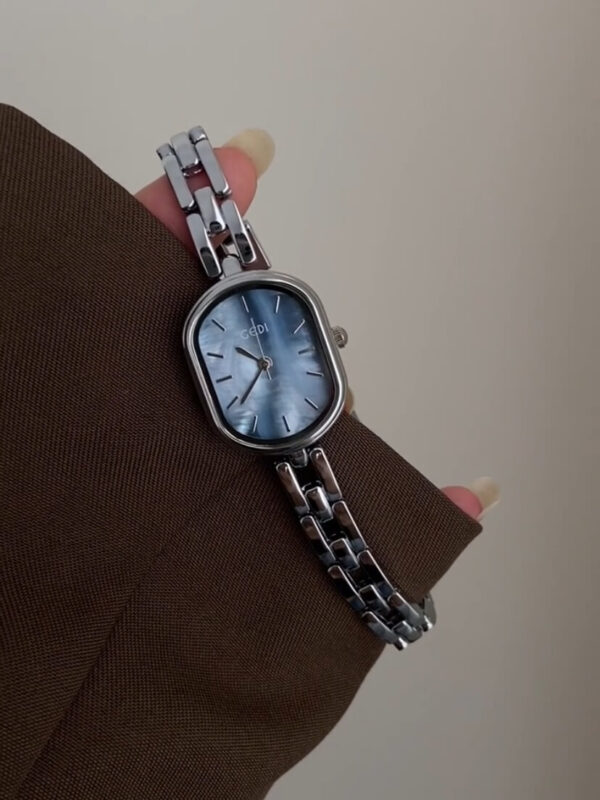
For a bracelet-style watch that adds a little color to everyday outfits, consider GEDI’s blue mother-of-pearl watch with a stainless-steel bracelet. Its softly shimmering dial and minimal hour markers offer a subtle focal point alongside a blouse or knitwear. Keep the product details and a service record together, just as you would for any watch in your collection.
Keep new and used button batteries away from children, and never hold one in your mouth while reading its code. The U.S. Consumer Product Safety Commission’s button-battery guidance advises securing loose used cells and seeking immediate medical attention if a battery is swallowed. Treat the removed cell as something to manage promptly, even when it no longer powers the watch.
Ask the repairer whether they collect used batteries. If you retain one, the U.S. EPA’s household battery guidance recommends taking button cells to an appropriate battery recycler, participating takeback retailer or household hazardous-waste program. It advises insulating terminals with non-conductive tape or separating cells in individual plastic bags. Follow local collection instructions, and keep them inaccessible to children while awaiting disposal.
The best next step is to obtain one dependable specification for your watch, record it, and arrange replacement with the right attention to the case and seals. That leaves you with a watch you can wear again and a clear answer the next time someone asks which battery it takes.
 Optimized by Seraphinite Accelerator